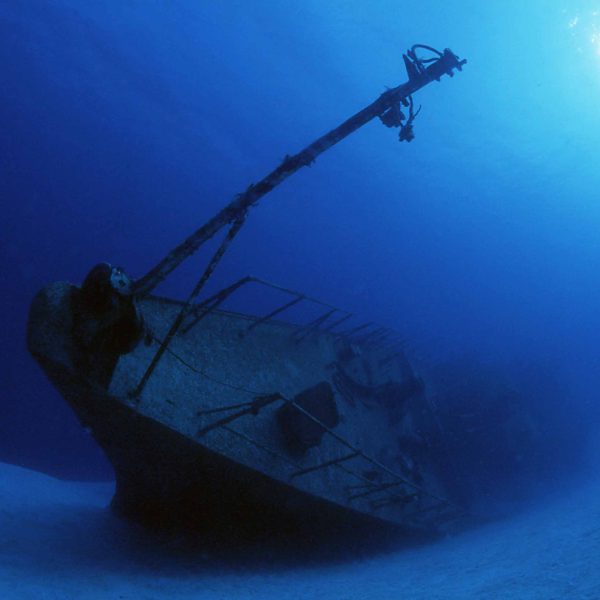
Combo Helitrox & Advanced Wreck
My Combination Helitrox & Advanced Wreck Diver training course is a comprehensive, five-day, entry-level course for decompression diving on shipwrecks. We will be conducting multi-level decompression dives and making wreck penetrations. Fun stuff!! Our dives will be down to 150 feet using Air, Nitrox, or Helitrox for Back Gas, and a single Decompression Gas. Students have the option of using Heliox, or not? For 150-foot dives, it is definitely not a necessity, and in class the individual students will learn enough to make an educated decision about their using Air or Helitrox.
My Course Details
Helitrox is a bottom dive gas mix utilizing no more than 35% Helium, with an Oxygen percentage of no less than 21%. I no longer teach TDI Decompression Procedures and instead teach TDI Helitrox because both courses are entry level for decompression divers, and the TDI Helitrox course gives value added in that we include Helium in our decompression theory lessons and discussions. Students will learn how to Plan and Execute Decompression dives, utilizing Nitrox and Helium back gases with a single Nitrox decompression gas to accelerate decompression. TDI Helitrox Diver is a prerequisite for either the TDI Extended Range (Deep Air to 180’), or the TDI Basic (Normoxic to 200’) Trimix courses.
Cave diving, Mine diving, Ice diving, and Wreck diving are all extreme overhead environment diving disciplines. They all have some similarities, but they also have some profound differences. Wreck dives are not Cave, Mine or Ice dives. They are different. Shipwrecks are complex manmade constructions, that have ended up on the seabed for one reason or another. Knowledge of the ship’s design, construction, purpose, and history all have value for us as we dive the wreck. Our goal is to understand the wreck in ways that give us an advantage in navigation, penetration, exploration, and even salvage. The key is having sufficient preparation that allows us to create an intelligent, detailed Dive Plan based on what we know, or think we know, about both the ship, and the wreck. The Dive Plan is our structure, our physical and emotional support. No matter what happens, we have a Detailed Plan to fall back on. A well-constructed, detailed Dive Plan is easier to execute, it minimizes risk, it provides justified confidence, and it better helps us achieve our operational goals, whatever those might be.
For the diving portion of the course, we will essentially work on the decompression skills during the descents and the ascents, and work on the Advanced Wreck Diver skills while we are on the bottom. We will make very efficient use of our time underwater, and we will be busy every dive, but I promise I will not overwhelm you. This is not SEAL training.
To prepare for this course, students will have to complete the TDI Online Training Modules for both Decompression Diver and extended Range/Trimix Diver, as well as read the TDI Advanced Wreck textbook, and go over some supplemental study materials I will send to you in a Welcome Email, which will also have logistics info.
The bulk of this course is not in the books; it comes from my decades of deep wreck diving experience. I will put together a ZOOM Call a week or two before the start of class at a convenient time for all. You will have an opportunity to ask any questions you might have prior to the start of class, and we will go over our dive plan for Day One. When you arrive for training, you will have the necessary basic knowledge for us to get started. I want you to be comfortable, and confident, not stressed, so you will learn as much as possible. I am available for questions pretty much at any time.
Safety Statement
Underwater overhead environments are inherently dangerous, with dives requiring mandatory multi-level decompression and wreck penetration being even more so! Our priority must be diver safety, both on the boat, and in the water. We expect student divers to do their best to contribute to our safety goals by minimizing distractions, staying situationally aware, and being responsible for making mature decisions.
What – The TDI certification portion of the course is Four days, eight OW Ocean dives total, diving in the morning with classroom in the afternoon, at which time you can be certified for both TDI Helitrox Diver and TDI Advanced Wreck Diver.
The morning of our 5th day is our Weather Backup Dive Day, where we can make up for any lost weather dive days, or we just go out and make another training dive together, followed by a debrief in the classroom.
Where – I teach this class out of Pompano Beach, Florida. The wrecks are no more than a 20-minute boat ride out of the inlet for this course.
When –
May 13 thru 18, Wednesday to Monday – Advanced Nitrox added – Class is Full
July 26 thru 31, Sunday to Friday
If the above dates do not work for your schedule, or the classes are full, contact me through the website or by email, and we will work out some dates that work for us both. shadowdivers@me.com
Schedule –
Day 1 – AM Two nice, easy wreck skill/shake out dives, Max depth around 100′, PM Classroom for Debrief and academics.
Day 2 – AM Two more nice, easy skill dives around 110′, PM Classroom for Debrief and academics.
Day 3 – AM Two Wreck Dives 130′ max, PM Classroom for Debrief and academics.
Day 4 – AM Two Wreck Dives 150′ max, PM Classroom for Debrief and academics.
Day 5 – AM Makeup Weather Backup Dive Day, or additional skill dive if a Make Up Dive is not needed. Dive and debrief.
Certification
Upon successful completion of this course, you will receive the TDI Advanced Wreck Diver, and the TDI Heliox Diver certifications. Your Tuition is for the class, not the certifications. The certifications must be earned. If you do not meet the standards set by TDI, we might require you to do another day of diving more, depending on the situation, but we will not give up on you!!!
Class Size
For this Class, 2 Students minimum, 4 students maximum, with a second Instructor and/or Divemaster with four student classes. I personally teach the class.
Student Costs
- Tuition – Tuition for this class is $2,300, and it includes almost everything, except charter fees and tips, as listed below. What it includes is Five days of training, the TDI Advanced Wreck Textbook, all TDI Certification fees, all air and Nitrox fills (Helitrox is available, but not included), and rental cylinders (Faber LP85’s, & AL deco gas cylinders) are all included.
- Deposit – A 50% deposit of $1,150, holds your spot. Balance is due on the first day of class. I will invoice you so you can pay me on the website at your convenience.
- Charter Fees & Tips – The Charter fees are roughly $100 a dive day and are paid by the student directly to the boat operator each day. They take pretty much all forms of electronic payment. Tips for the boat crew typically run $10 to $20 per dive day, depending on the level of service.
- Equipment – You bring your own equipment. If for some reason you do not have something, I will loan you whatever you need or do not have.
Preparation
- Welcome Email – I will send you a Welcome Email with information on logistics, information on lodging, TDI Online Decompression Procedures and Trimix Training codes, and supplemental study materials. I will also send you a copy of the TDI Advanced Wreck Textbook.
- ZOOM Call – A week or two before class, I will schedule a ZOOM call at a time convenient to all. We will go over administrative stuff, our Dive Plan for Day One, and you will have the opportunity to ask any questions that you might have. It will be about an hour and a half. The more prepared you are, the more comfortable you will be, and the more you will learn.
Weather
We all love South Florida diving, and this is the Sunshine State! I try to only schedule classes in months where we have a history of reasonably good local weather!! However, as technical wreck divers we all should understand we are at the mercy of the weather. I will do my best to make our dives happen, but student safety is paramount, and if the weather is not suitable for diving, we will not dive.
Because I am already including the Makeup Dive Day, beyond the TDI requirements, our chances of completing our dives for certification are extraordinarily good!! However hurricanes are a thing, and it is possible I could lose a day, or even that I must cancel the entire class and reschedule? This happens less than once a year on average. I will always do the best I can with the hand we are dealt by the weather.
You might want to consider Travel Insurance, or book travel dates that leave you some wiggle room? This is not required by me, and up to you. You should also know that most classes finish on time without any serious weather incident.
Insurance
- I require student divers to have Dive Accident Insurance, and I recommend DAN Insurance from Divers Alert Network. Personal Health Insurance, although good, is not sufficient for hyperbaric treatments if necessary.
- Travel Insurance, and Dive Equipment Insurance, are not bad ideas, but are not required by me.
Cameras
I realize that divers love to take photos and videos and do things like post them online. However, my job is to make the most of our time together, and your job is to learn as much as you can. Underwater photography is a distraction so I request you leave your cameras topside, where you can take whatever pictures you want, when you have time. For the last couple of dives, I will shoot video for student divers to view in the debrief. I make this video available to you on Dropbox for download afterward.
Private Instruction
Private clients make up about 15% of my business. If you are interested in Private Instruction, please contact me.
Course equipment requirements
What you carry is important. You want what to have with you exactly what you will need and not be carrying any of the crap you will never use. Below is what you should have for class, however in class we will discuss other important considerations such as accessibility, rigging, and validation. The “how” your gear is set up is crucial.
- Wetsuit/Dri Suit – Depending on the time of year, and personal preference, either a 3mm or a 5mm wetsuit or a Dri Suit. If you want to dive Dri, go for it, but the water is going to be cooler in the Spring, warmer in Summer & Fall.
- Pockets – I have glued two pockets, one to each of the thighs on each of my wetsuits. One pocket is on the front thigh; the other is on the side of my thigh. Installation was easy, AquaSeal and a pocket. I put the top of the pocket about an inch above the crotch of the suit. The pockets are well made and last longer than the wetsuits. When you retire the old, tired wetsuit, you can transplant the old pocket to new fluffy wetsuit. I use pockets to carry my Backup Mask, Lost Line Spool, Jon Line, Wet Notes, and spare Double Dog. They also help hold my knives in place. I prefer the Zippered Pockets by Dive Rite, Apeks, or Mares. Most Dri Suits come with pockets, usually big Velcro ones, which I am not a fan. Some wetsuit divers, not me, like the Tech Shorts with the bigger pockets. If you need help let me know.You can see what I use, if you have any questions, and go from there.
- Hood/Hooded Vest - A hood protects your head while inside the wreck. It will keep rust and marine life away from your scalp and protect you from injury. It will also keep your mask on your head where it kind of belongs. Personally, I prefer a hooded vest to a hood, as it keeps rust and other debris from going down my neck onto my back, as well as protecting my head.
- Gloves – Simple hand protection is what you need and if you already have gloves, they will probably work best? For warm water, I prefer simple Gardening gloves or cut-resistant gloves, like Dyneema. Wreck diving is a full contact sport, and we need to protect our hands.
- Fins and Booties – Long blade Freediving fins are not suitable. Open heel fins work best. I do not wear booties, I wear mid height Marine Assault boots, either Altama or Woobies, with Lycra Socks, and XXL size fins. They are made for salt water, they are real shoes, and they last literally for years.
- Mask – A good mask that fits you is essential. When suiting up, I wear my mask under my hood. In other words, I put on my mask and then pull up my hood. This keeps the mask on my face and does not allow the strap to blow off on water entries, or pop off if my mask gets bumped in tight spaces. I credit this concept to Steve Belinda. I carry a backup mask, but I also practice active prevention.
- Backup Mask – You need a Backup Mask, and a pocket to carry it in. but big pockets do not mean you have to fill them with a pile of crap like it is your mom’s purse.If you need your backup mask, you are probably blind to some degree, so you do not want to have to root around to find it.
- Cylinders – IMHO, back mounted double steel cylinders with a manifold are the best primary cylinder setup for Open Circuit deco wreck diving. Side mounts, or Twin K Valves will also work, but not as well. You can bring your own cylinders, or I will supply you with Twin Faber LP85’s, and an Aluminum 40cf deco cylinder, all included in tuition.
- Regulators
-
- You will need a Primary and a Primary Backup regulator on your Bottom Gas supply. One of your second stage regulators needs to be on a “long” hose that is 6′ or more in length. If you do not already have a long hose, you can borrow one from me, for free. I prefer 6′ to anything longer, but some guys like 7’ or even 9’? My Left Reg is my Primary, but the internet says I am wrong?
-
- You will need an O2 clean deco gas regulator for each deco gas. I use color coded hoses on my Deco Regs. If I have a Green Hose on my Right Rich gas, and a Yellow Hose on my Lean Left gas, my buddy can see at a distance, which gas I am breathing from. If all your hoses are black, it looks like black spaghetti! Make it easy for your buddy to help you, by confirming that you are on the right gas.
-
- You need a single SPG (or transmitter) connected to the first stage regulator for each gas supply. It is not necessary to have two SPG’s on your Bottom Gas with a manifold, but you can if you like? I have an analog SPG, and an AI transponder on my Back Gas.
-
- You will need a “Necklace” or some other way to hold your backup second stage regulator in place around your neck. I prefer using simple 3/16″ bungee and not the rubbery, store-bought ones where the regulator keeps falling out. A bungee necklace just works better. If you need one, I can make it for you.
- Wing – You need a BCD suitable for the Open Water environment with your setup. A typical Wing will have 45# to 65# of lift, and IMHO 45# is ideal for most wreck divers who are weighted properly. The 45# wings, are generally narrower than the 60# wing. This means your profile for navigating restrictions is wider with the larger 60# wing. I like the Dive Rite Rec Wing in 45# with single or dual bladders because the bungees give me a nice narrow profile, and great trim. For deeper dives, divers really need an alternate ascent plan, in the event of a Wing Failure. Your best options are going to be Drysuit, dual bladder wing, or dedicated SMB/Lift Bag, in that order. If you have a dual bladder wing, do not have it connected to an inflator hose, ready to inflate. You are more likely to have an inflator issue, than a wing issue.
- Backplate – You need a backplate with straps or harness. Backplates come in Stainless Steel and Aluminum. Stainless is heavier, and to reduce weight some have cutouts. In general, Drysuit divers want heavier plates, and Wetsuit divers want lighter plates, with Steel cylinders. If I am diving Aluminum 80 doubles, I use a stainless back plate for the weighting, so I don’t need additional weight. Brand is not so important. I personally prefer a continuous Strap over a sewn Harness for a variety of reasons. I also cross the straps behind my neck, right shoulder to left waist, and left shoulder to right waist. It better holds the cylinders in place and keeps them from moving around.
- Dive Computer – For this class, a Shearwater Dive Computer is important for good reason. You also will need a backup computer or depth gauge. In class, we will download your dives on the Shearwater and dissect them. This makes the Shearwater a valuable learning tool for you, and it will make a definite difference in the way you dive after the class. If you do not have a Shearwater, I will loan you one of mine. We will spend some time on the computer set up during our Zoom Call.
- Dive Planner – In class, we will plan our dives together from my laptop on the big screen. We will be using Multi Deco, and the Bühlmann ZHL16-C GF algorithm which will match the Shearwater. If you want to bring your planning device and software, bring it to class. If you want to get Multi Deco, get Multi Deco, or you can try MV Planner for free. It is by the same Multi Deco guys, but it is their old no-frills shareware. Try playing around with it, if you want?
- Lights – One Primary, and one Backup are required. I would suggest 1000 lumens minimum.I prefer on/off buttons to twisty turny. For wreck diving, Cannister Lights are unnecessary.
- Strobe Light – A strobe is optional for the class, but necessary for wreck diving. Marking the anchor line or marking staged cylinders is important. I also use them for navigation and penetration. Personally, I have more than a few, and I will show you how I use them. I like the Tekna Strobe 6. It is positively buoyant, but a large Bolt Snap will keep it from floating away and let it lie with the light up for the best visibility. Don’t go out and buy a bunch of Strobes until I teach you to use them. Bring what you already have.
- SMB – You will need a good SMB for wreck diving, and you will use it in class. Bring what you have for an SMB, but no little “Safety Sausage”. We will be hanging on our SMB’s for Deco, so you want a real SMB. The most important thing in selecting an SMB is how do you fill it? I use the Carter 35# SMB, and fill from the bottom with my Wing inflator. Yes, think about it. I can also fill it with an LP hose, reg, whatever. I have had some of my SMB’s for more than 15 years and they have hundreds of dives on them. Don’t go buy a new one, borrow one of mine and then get what you really want when you know what that is.
- Reel –This is to use with your SMB, and for use on or inside the wreck for penetration, navigation, or as a search line. I like the Dive Rite Slide Lock2 reel, but I also have the Manta style. Bring what you have, or borrow one from me, and then get a reel you like.
- Spool – Typically, I will carry at least one spool, probably two, in my pocket for Lost Line Situations on wreck penetrations. I also might use it for SMB ascents or navigation. Bring everything you already own and borrow from me what you don’t have. You will know more of what you want, and how you want to rig it, by the end of class.
- Cutting Device – Bring Two cutting devices, with at least one being a real knife, not something “like a knife”? Make it sharp. There are reasons.
- Slate or Notebook and Pencil – We want to make notes on our dive plan and notes on the wreck. We will take information into the water, and out of the water. I use a simple Dive Rite Wrist Slate. I put White 3M – 3903 Vinyl/Rubber Duct Tape on the slate, and write on that, not the slate itself.
- Jon Line – I will supply you with a high quality Jon Line, you supply the Bolt Snap. It will be the finest Jon Line money can buy. Feel free to bring your own Jon Line, if you like, but the one I give you will be much better!
- Bolt Snap Clip – Bring two spare “Double Enders”, “Double Dogs”, “Bolt Snaps”, or whatever you want to call them. I used to say bring one, but “One is none, two is one, and three is two.”
- Weight – In theory, you will not need any weight if you are diving wet? Either way, I will get you weight if you need it. If you are diving dry, bring a belt or harness, and we have weight.
You are free to bring anything else you would like, other than cameras or scooters, as they are distracting. If you have any equipment questions, which you will, just ask. My job is to help you. You will undoubtedly want to change some stuff around, but you do not have to change everything on Day One, or even before the end of class.
Course prerequisites
- Minimum Age: 19
- Minimum Previous Certifications:
- TDI Intro to Tech or equivalent proof of experience in cylinder setup
- Advanced Open Water Diver or equivalent
- Advanced Nitrox Diver or equivalent
- Wreck Diver Specialty or equivalent (or Cavern Diver)
- Proof of at least 50 open water dives
- Dive Accident Insurance
How much is this course?
$2300Want to know more?
Ask more questions or schedule any of these courses Email Us.